



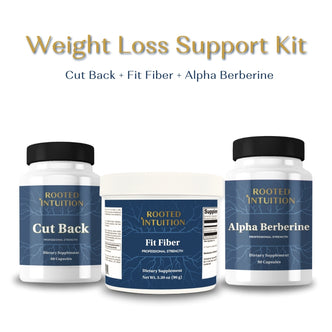


Cortisol gets a bad reputation — but it's not the villain. It's a steroid hormone your adrenal glands produce every day, and it does essential work: waking you up in the morning, regulating your blood sugar, moderating inflammation, and calibrating your stress response when you actually need it. The problem isn't cortisol. The problem is chronic elevation — a state where your body keeps producing more cortisol than your daily life actually requires, and the downstream effects start to accumulate.
As pharmacists who formulate supplements, stock evidence-based products, and consult on hormone health across Eastern Iowa, we get a lot of questions about cortisol supplements. What works? What's marketing? When is a supplement the right tool — and when is something bigger going on? This guide is our honest, pharmacist-level answer to all of it.
We'll cover what drives cortisol out of balance, which supplements may help support healthy cortisol levels, how to evaluate quality, and — critically — when supplements alone aren't the full picture.
Supplement disclaimer: The supplements discussed in this post are not intended to diagnose, treat, cure, or prevent any disease. Always consult your healthcare provider before adding a new supplement to your routine, especially if you are managing a health condition or taking prescription medications.
What Is Cortisol and Why Does It Get Out of Balance?
Cortisol is produced by your adrenal glands in response to signals from the hypothalamic-pituitary-adrenal (HPA) axis — a feedback loop that connects your brain, pituitary gland, and adrenal glands. In a healthy pattern, cortisol peaks in the morning (which is part of what gets you out of bed), declines gradually through the day, and bottoms out at night to allow restorative sleep.
What disrupts this rhythm? A number of factors that are unfortunately common in modern life: chronic psychological stress, poor or insufficient sleep, blood sugar swings, over-training without adequate recovery, undereating, and ongoing inflammation. When any of these inputs stay elevated for weeks or months, the HPA axis can shift into a persistently activated state — and cortisol levels reflect that.
An important clinical distinction: The cortisol dysregulation we're discussing here — driven by lifestyle and chronic stress — is different from clinical hypercortisolism, or Cushing's syndrome, which is a medical condition caused by a tumor or long-term steroid use. Cushing's requires medical diagnosis and treatment. If you're experiencing severe, unexplained symptoms, please talk with your provider. The supplement strategies below are appropriate for everyday cortisol support, not as a substitute for medical evaluation.
Warning Signs Your Cortisol May Be Elevated
Chronically elevated cortisol tends to show up in patterns that are easy to attribute to "just being stressed" — which is exactly why it often goes unaddressed for a long time. Signs worth paying attention to include:
- Weight gain around the midsection, even without changes to diet or activity
- Difficulty falling or staying asleep, or waking unrefreshed
- Persistent fatigue that doesn't improve with rest
- Heightened anxiety or a low-grade sense of dread
- Intense sugar or carbohydrate cravings, especially in the afternoon and evening
- Brain fog — difficulty concentrating or retaining information
- Frequent illness or slow recovery from illness
- Irregular menstrual cycles or worsening PMS symptoms
- Feeling "wired but tired" — exhausted but unable to wind down at night
- Low libido or mood changes that feel out of proportion to circumstances
If several of these patterns resonate, that's the conversation worth having with a pharmacist or healthcare provider before adding any supplement. A clinical picture — and in some cases, lab testing — gives you a baseline that supplementation alone can't provide. Our team offers consultations for exactly this kind of conversation. Schedule a consultation here.
Supplements That May Help Support Healthy Cortisol Levels
The following ingredients have the strongest evidence base for cortisol support and are the ones we most commonly recommend or formulate with at Towncrest. Each works through a different mechanism — which is why combination approaches are often more effective than a single-ingredient product.

Ashwagandha (KSM-66 or Sensoril)
Ashwagandha is the most studied adaptogen for cortisol support, and the evidence is reasonably strong. Multiple randomized controlled trials have found that standardized ashwagandha extract — particularly KSM-66 and Sensoril, two clinically validated forms — may help reduce cortisol levels, perceived stress, and anxiety in adults under chronic stress.
The proposed mechanism involves HPA axis modulation: ashwagandha's active compounds (withanolides) appear to help regulate the feedback sensitivity of the stress response, so the system doesn't over-fire. Typical evidence-supported dose ranges fall between 300–600 mg daily of a standardized extract. Form matters here — generic "ashwagandha powder" products without standardization often deliver inconsistent withanolide content.
Considerations: Ashwagandha is generally well-tolerated but is not recommended during pregnancy. A small number of people experience GI upset; taking it with food usually resolves this.
L-Theanine
L-theanine is an amino acid found naturally in green tea leaves. It works through a different pathway than ashwagandha — promoting alpha-wave activity in the brain and modulating GABA, glutamate, and serotonin levels. The result is a calm, focused state without sedation. For cortisol support specifically, L-theanine may help blunt the acute cortisol response to psychological stress.
It pairs well with ashwagandha for this reason: ashwagandha works on HPA axis tone over time; L-theanine provides more immediate situational support. A typical dose is 100–200 mg, and it can be taken as needed or daily.
Phosphatidylserine
Phosphatidylserine (PS) is a phospholipid found in high concentrations in brain cell membranes, and it's one of the more specific cortisol-targeting supplements in this list. The evidence base for PS centers on its ability to blunt the cortisol spike triggered by exercise-induced physical stress — making it particularly relevant for athletes or individuals whose cortisol is chronically elevated by intense training without adequate recovery.
Studies have used doses ranging from 400–800 mg daily. It's well-tolerated and has a favorable safety profile. If your cortisol pattern is primarily exercise-related, PS is often the first ingredient worth adding.
Magnesium (Glycinate or L-Threonate)
Magnesium is involved in over 300 enzymatic reactions in the body, and its relationship with the HPA axis is well-established. Magnesium may help calm HPA axis reactivity, and deficiency — which is common, particularly in adults consuming processed diets — is associated with heightened stress sensitivity and disrupted sleep architecture.
For cortisol support, form matters significantly. Magnesium glycinate is highly bioavailable and gentle on the digestive system, making it the most practical daily option. Magnesium L-threonate has shown unique ability to cross the blood-brain barrier, which may make it better suited for cognitive and mood applications. We've covered magnesium in depth — including form comparisons and dosing guidance — in our best magnesium supplement for women guide.
Rooted Intuition carries pharmacist-selected magnesium formulations — ask our team which form is right for your specific needs.
Rhodiola Rosea
Rhodiola is another adaptogen with meaningful evidence for stress and cortisol support. It may help normalize the cortisol-to-DHEA ratio — a marker that reflects how well the body is balancing its stress hormone output — and it has been studied for fatigue reduction in people with stress-related burnout.
One consideration: rhodiola can have a mildly activating effect, which is helpful for fatigue-dominant presentations but occasionally counterproductive for people whose primary complaint is anxiety or sleep difficulty. Starting with a lower dose (200–300 mg) in the morning is generally the right approach.
Vitamin C
Vitamin C is concentrated in the adrenal glands at higher levels than almost anywhere else in the body — and it is rapidly depleted during periods of acute and chronic stress. Studies suggest that supplemental vitamin C may help reduce the cortisol response to psychological and physiological stress and support faster cortisol recovery after stressful events.
It's also one of the most accessible and lowest-risk options on this list. A dose of 500–1,000 mg daily of ascorbic acid or buffered vitamin C is well within established safety ranges for most adults and is an easy addition alongside other targeted supplements.
B-Complex (Especially B5 / Pantothenic Acid)
The B vitamins — particularly pantothenic acid (B5) — play a direct role in adrenal function and the synthesis of steroid hormones, including cortisol. Chronic stress depletes B vitamins, and deficiency may impair the adrenal glands' ability to regulate output appropriately. A comprehensive B-complex that includes meaningful amounts of B5 is a reasonable foundational addition, especially for people under sustained high stress or with dietary patterns that may not provide adequate B-vitamin intake.
Pharmacist's Pick: At Towncrest, we carry pharmacist-vetted formulations across these ingredient categories — including Rooted Intuition products formulated by our own pharmacy team, and Pure Encapsulations, one of the most rigorously third-party-tested professional supplement brands available. If you're not sure which form, dose, or combination is right for your situation, our pharmacists can help you work through that. No appointment required at any of our Iowa locations — or reach us through our consultation form.
Is Ashwagandha or L-Theanine Better for Cortisol?
Both ashwagandha and L-theanine may help support healthy cortisol levels, but they work differently and suit different patterns of need. Ashwagandha works best as a long-term HPA axis regulator — you take it daily and notice cumulative effects over several weeks as it helps modulate your body's overall stress reactivity. L-theanine works more acutely, promoting calm focus in the hours after you take it without causing drowsiness.
For most people dealing with chronic, low-grade stress and elevated cortisol patterns, ashwagandha is the primary recommendation — with L-theanine as a complement for high-stress days or situational anxiety. They can be taken together and are generally well-tolerated in combination. The question of which to prioritize comes down to your specific pattern: if sleep and baseline stress tone are the issue, lead with ashwagandha. If acute stress response and focus are the priority, lead with L-theanine.
Can You Buy Cortisol Supplements?
Yes — with an important clarification about what that actually means. You can buy over-the-counter supplements designed to support healthy cortisol levels, including the adaptogens, amino acids, vitamins, and phospholipids discussed in this post. These are legal, widely available, and what most people mean when they search for "cortisol supplements."
Prescription cortisol — hydrocortisone — is an entirely different category. It's a corticosteroid medication used to treat adrenal insufficiency and other medical conditions, and it requires a prescription from a licensed provider. It is not the same as the supplements discussed here, and it is not something you would self-supplement with.
The confusion occasionally arises because some supplement marketing uses language that implies a more direct cortisol-blocking effect than the evidence actually supports. What these supplements do — when they work — is help support your body's own regulatory systems, not directly block or replace cortisol production. That distinction matters for setting realistic expectations.
When Supplements Aren't Enough — The Hormone Picture
Cortisol doesn't operate in isolation. It's part of a broader hormonal network that includes estrogen, progesterone, testosterone, DHEA, and thyroid hormones — and chronic cortisol elevation can disrupt all of them. Elevated cortisol can suppress progesterone production, impair thyroid conversion, lower testosterone, and accelerate the hormonal shifts of perimenopause. On the flip side, underlying hormonal imbalances can themselves drive elevated cortisol.
This is where the supplement conversation has its limits — and where a personalized evaluation becomes genuinely valuable.
If you've tried targeted supplement support and are still experiencing the patterns described earlier in this post, it may be worth looking at the broader hormonal picture. Lab testing — including cortisol patterns at different points in the day, DHEA levels, sex hormone panels, and thyroid markers — can provide a clearer picture of what's actually driving your symptoms. Abnormal hormone levels across multiple markers often call for a more integrated approach than any single supplement can address.
At Towncrest, our pharmacist-prescriber team can help evaluate that picture and discuss options that may include customized compounded bioidentical hormone therapy, targeted supplement protocols, or both — depending on what your labs and symptoms suggest. This care is available to Iowa patients in-person and via telehealth.
What to Look for in a Quality Cortisol Supplement
Not all supplements are created equal — and the cortisol supplement category has more than its share of products that don't hold up to scrutiny. Here's what to look for:
Standardized extracts. For adaptogens especially, the active compounds need to be present at therapeutic concentrations. Look for KSM-66 or Sensoril on ashwagandha labels, not generic "root powder." Standardization percentages should be disclosed.
Third-party testing. Look for NSF Certified for Sport, USP Verified, or Informed Sport certification — or brands that conduct independent testing and publish certificates of analysis. This verifies that the product contains what it claims and is free from contaminants.
Transparent dosing. Avoid "proprietary blends" that list ingredients without disclosing individual amounts. If a label hides the doses behind a blend, you have no way to evaluate whether any ingredient is present at a meaningful level.
Pharmacist-formulated or pharmacist-vetted brands. There's a meaningful difference between a supplement formulated by a pharmacist who understands bioavailability, form selection, and drug interactions — and a supplement assembled by a contract manufacturer for retail margin. Rooted Intuition and Pure Encapsulations are examples of what pharmacist-level sourcing looks like in practice.
If you have questions about a specific product you've seen elsewhere, our pharmacists are happy to give you an honest assessment. That's part of what makes an independent pharmacy different from a supplement website.
Frequently Asked Questions
What is the best supplement for cortisol?
Ashwagandha — particularly KSM-66 or Sensoril standardized extract — has the strongest evidence base among supplements for cortisol support and is the most common first recommendation. For a more comprehensive approach, combining ashwagandha with magnesium glycinate and L-theanine addresses multiple pathways: HPA axis modulation, nervous system calming, and acute stress response. The best choice for you depends on your specific symptoms and health picture.
What are warning signs of high cortisol?
Common signs that cortisol may be chronically elevated include unexplained weight gain around the abdomen, difficulty sleeping, persistent fatigue despite rest, heightened anxiety, intense sugar cravings (especially in the afternoon), brain fog, frequent illness, irregular menstrual cycles, and feeling "wired but tired" at night. If several of these apply to you, a conversation with a pharmacist or healthcare provider is a worthwhile next step.
Is ashwagandha safe to take daily?
For most healthy adults, ashwagandha is considered safe for daily use at evidence-supported doses (300–600 mg of standardized extract). It is not recommended during pregnancy. A small number of people experience mild GI discomfort, which is usually resolved by taking it with food. As with any supplement, if you are managing a health condition or taking prescription medications, consult your healthcare provider before adding ashwagandha to your routine.
How long does it take for cortisol supplements to work?
Most adaptogens, including ashwagandha and rhodiola, require consistent daily use for 4–8 weeks before the full effect is apparent. These are not acute interventions — they work by gradually modulating the HPA axis over time. L-theanine and magnesium can produce more noticeable effects within days. Setting a realistic 6–8 week evaluation window before judging efficacy is a reasonable approach.
Can cortisol supplements help with belly fat?
Chronically elevated cortisol is associated with increased fat storage around the midsection — a pattern driven by cortisol's effect on insulin sensitivity and fat cell distribution. If cortisol dysregulation is contributing to abdominal weight gain, supporting healthy cortisol levels through supplements, sleep, and stress management may help as part of a broader approach. However, weight changes are not a guaranteed outcome, and supplements that may help lower cortisol are not weight-loss products and should not be framed as such.
The Bottom Line
Cortisol balance is real, measurable, and something that targeted supplement support can genuinely address — when the right ingredients are chosen at the right doses and quality standards. Ashwagandha, L-theanine, magnesium, phosphatidylserine, rhodiola, vitamin C, and B-complex each offer distinct mechanisms worth understanding, not just a list of names to add to a cart.
What matters most is matching the supplement strategy to your actual pattern — and knowing when the picture calls for something more than supplementation alone.
Iowa patients can consult with our pharmacist-prescriber team in person at any of our Eastern Iowa locations or via telehealth. Wherever you are, you can explore the Rooted Intuition supplement catalog and Pure Encapsulations formulations through our online store.
Ready to take a personalized approach? Schedule a consultation with our team — or shop our full supplement collection to get started today.
This content is for informational purposes only and does not constitute medical advice. Supplements are not intended to diagnose, treat, cure, or prevent any disease. Consult your healthcare provider before starting any new supplement, especially if you are taking medications or managing a health condition. Compounded medications are prepared based on individual patient prescriptions and are not FDA approved. Prescribing services are available only to patients located in Iowa.